Tinnitus tracker
Track your tinnitus in seconds a day.
Ringwise keeps a daily check-in, flare-up log and trigger history in one place, on your own device — so you stop trying to remember how last month went when the audiologist asks.
Your health logs stay on your device. No tracking.
How it works
Check in in 15 seconds
Two sliders for loudness and distress, one tap for sleep, stress, caffeine, alcohol, loud noise or jaw tension.
Log flare-ups as they happen
One button records the time. Tag a likely trigger if you want to.
See what tends to coincide
After two weeks, Ringwise points out patterns in your own entries — without claiming causes.
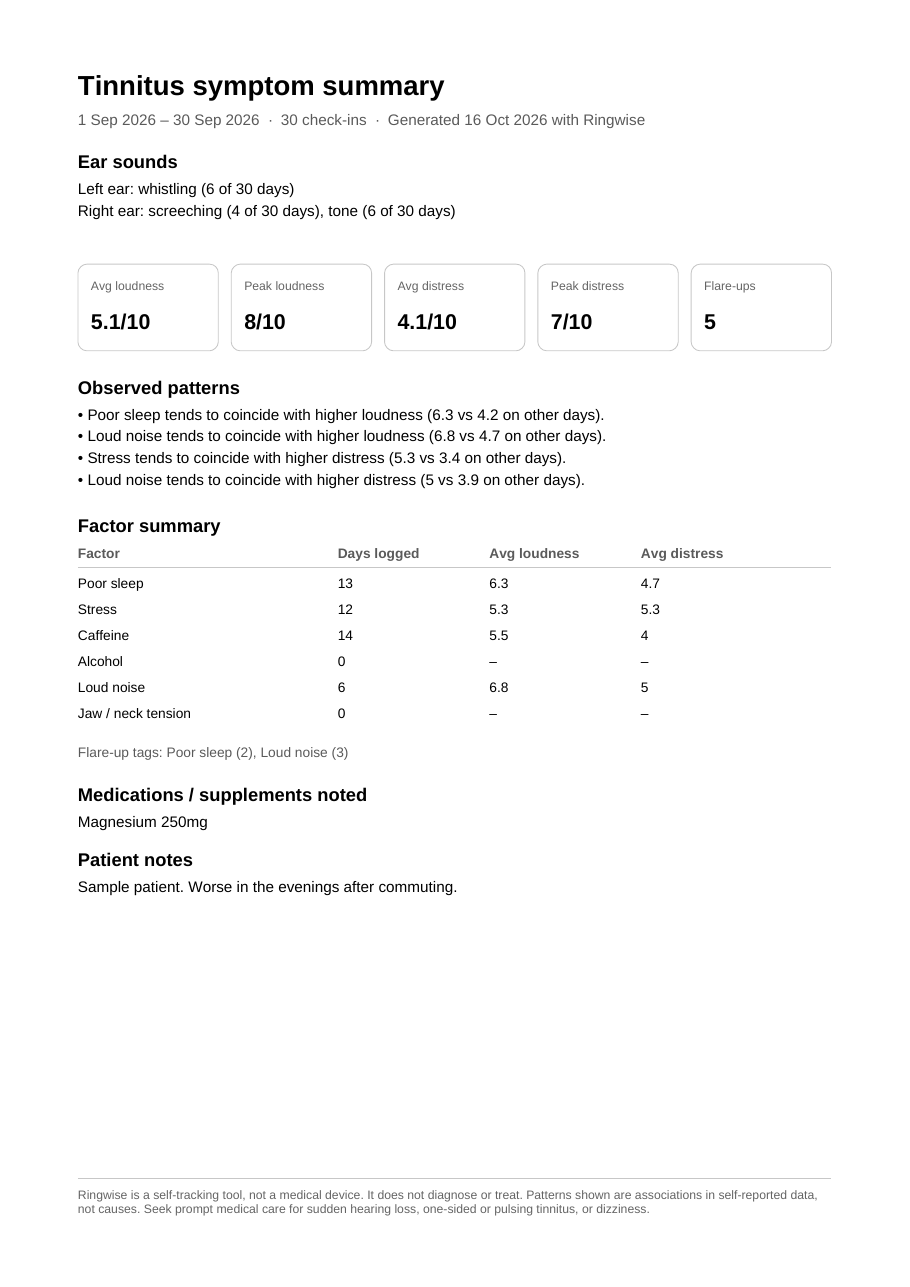
Example report made from sample data
Then it writes the report
Pick a date range and Ringwise lays everything out on one page your GP, ENT or audiologist can read in under a minute.
- Average and peak loudness and distress for any date range
- Number of flare-ups and their tagged triggers
- Left and right ear sounds — screeching, whistling, tone
- Patterns that tend to coincide with worse days
- Day counts for each factor, plus medications and supplements
- Your own notes, and a clear medical disclaimer
What to bring to a tinnitus appointment
GP, ENT and audiology appointments are short. A clear tinnitus diary helps you use that time well. Before you go, try to have:
1. At least two weeks of diary entries
Daily loudness and distress scores show your clinician the usual level and how much it changes, which one visit can't show.
2. Flare-up dates and times
When spikes happened, how long they lasted and what was going on around them.
3. Which ear, and what it sounds like
Left, right or both, and whether it's screeching, whistling or a tone. This helps your clinician understand what you're hearing.
4. Sleep, stress, caffeine, alcohol and noise
Day-to-day factors that tend to coincide with worse days, noted on the same day they happen.
5. Medications and supplements
Anything you started, stopped or changed, with dates.
6. A one-page summary
Short and factual is easiest for a busy clinician. Ringwise builds this page for you from your check-ins.
Tinnitus tracking questions
How do I keep a tinnitus diary?
Once a day, rate how loud your tinnitus is and how much it bothers you, each from 0 to 10, then tap anything that happened that day, like poor sleep, stress or loud noise. Ringwise takes about 15 seconds.
Why track loudness and distress separately?
How loud tinnitus is and how much it bothers you don't always go together. Tracking both shows clinicians whether the sound or your reaction to it is changing.
How long should I track before an appointment?
Two weeks or more is a good aim. Ringwise starts showing patterns after 14 check-ins.
Can tracking find my tinnitus triggers?
A diary can show factors that tend to coincide with worse days. That doesn't prove they cause them, so talk any changes through with your clinician.
Is my health data private?
Yes. Your check-ins stay on your own device. Only your sign-in and subscription are stored online, and you can delete your logs with one tap.
Do I need to install an app?
No. Ringwise runs in your browser on iPhone, Android or a computer, and you can add it to your home screen.
Free to track. Premium for the report.
Daily check-ins, flare-ups and your last 7 days are free. Premium adds the clinician report, trends and patterns, and CSV export — £3.99/month or £29.99/year ($4.99 / $39.99 in the US).